Friday, March 7, 2025

Biased WHO-commissioned review claims no cancer link to cellphone use

A Critical Analysis of the World Health Organization (WHO) Systematic Review 2024 on Radiofrequency Radiation Exposure and Cancer Risks (Response to Karipidis et al. 2024)

Hardell L, Nilsson M. A Critical Analysis of the World Health Organization (WHO) Systematic Review 2024 on Radiofrequency Radiation Exposure and Cancer Risks. Journal of Cancer Science and Clinical Therapeutics. 9 (2025): 09-26. doi: 10.26502/jcsct.5079261.

Abstract

Radiofrequency (RF) radiation was in 2011 classified as a possible human carcinogen by the International Agency for Research on Cancer (IARC) at the WHO. Currently the WHO undertakes a systematic review of human studies on the cancer risks. In a publication by Karipidis et al (2024), commissioned by the WHO, it was argued that based on all available studies there would be “moderate certanity evidence” that mobile phone use “likely does not increase the risk of glioma, meningioma, acoustic neuroma, pituitary tumours, and salivary gland tumours in adults, or of paediatric brain tumours.” However, the authors have overlooked results showing increased risks for brain tumours in the most exposed groups, the most exposed part of the head, and longest latency time from first exposure to tumour diagnosis. The authors also claimed that there would be “moderate certainty evidence” that transmitters and mobile phone base stations do not increase the risk of pediatric leukaemia. These conclusions are based on selective inclusion of very few and low exposure studies. This WHO evaluation is contradicted by scientific results that show increased risks of cancer from exposure to RF-radiation from mobile and cordless phones, transmitters, and base stations. Other scientists have concluded, after reviewing the available evidence, that RF-radiation may increase the risk of cancer. This article analysis the Karipidis et al review and highlights several errors, omissions, and conflicts of interests that may explain the conclusions of no cancer risk. The flawed evaluation of scientific facts should lead to retraction of the article.

Conclusion 

The Karipidis group’s conclusions on no cancer risks from use of mobile and cordless phones, or exposure to RF radiation from transmitters and base stations, are based on several errors in their interpretation of scientific results, omission of facts contradicting the conclusions and inherent conflicts of interest. Further, most of the results on which the authors base their conclusions are based on very low exposure levels not representative for the public’s exposure today and the authors have excluded or ignored results based on highest exposure categories. The conclusions by the authors of various grades of “certainty” that RF-EMF exposures do not cause cancer are unscientific and unjustified in view of the available scientific evidence. Evaluations of health risks from RF radiation should be performed by scientists without ties to ICNIRP or industry. Industrial direct or indirect ties may compromise objective and sound scientific evaluation. The serious scientific malpractice by Karipidis et al [1] with fatally flawed evaluation of radiofrequency radiation and cancer risks, as outlined in this review, should lead to retraction of the article.

--

Exposure to radiofrequency electromagnetic fields and risk of cancer: Epidemiology is not enough! (Response to Karipidis et al. 2024)


Di Ciaula A, Petronio MG, Bersani F, Belpoggi F. Exposure to radiofrequency electromagnetic fields and risk of cancer: Epidemiology is not enough! Environment International. Volume 196, 2025. doi: 10.1016/j.envint.2025.109275.

No abstract

Open access paper: https://www.sciencedirect.com/science/article/pii/S0160412025000261
--
Related post: 
==
January 15, 2025
WHO’s Cell Phone Radiation Cancer Study is “Seriously Flawed”
Accesswire Press Release, January 15, 2025

Contact: Joel Moskowitz, Ph.D., jmm@berkeley.edu 

Scientists conclude the review does not assure wireless safety, and should not be used to set public health policy 
 
A Letter to the Editor published in the journal Environment International by the International Commission on the Biological Effects of Electromagnetic Fields (ICBE-EMF) concludes that a recently published World Health Organization (WHO) systematic review and meta-analysis on cell phone radiofrequency radiation (RFR) and cancer risk by Karipidis et al. (2024) is scientifically flawed and does not provide a reliable assessment of the evidence on brain cancer risk associated with the use of cell phones and other wireless technologies. The ICBE-EMF are experts in researching the health effects of RFR from wireless devices and infrastructure including cell phones, Wi-Fi and cell towers.  
 
ICBE-EMF’s scientific leadership points to numerous significant flaws in the WHO review that combine to understate the cancer risk from wireless exposure and undermine the validity of the study’s conclusions, raising serious concerns about its impact on public health policy. 
 
“Cell phone and wireless safety is not assured. Conclusions of no cell phone cancer risk’ in the Karipidis et al. paper is a misleading representation of the science because credible scientific evidence from case-control studies suggests increased cancer risk from cell phone radiation,” stated ICBE-EMF. Seven meta-analyses published since 2016 have reported significant links between cumulative and long-term cellphone use and brain tumor risk including a 2024 review which highlighted the same methodological flaws that ICBE-EMF identified. 
 
“The WHO review failed to follow widely-used scientific guidance for meta-analysis reviews,” stated John Frank MD, a physician and epidemiologist at the University of Edinburgh, Professor Emeritus, University of Toronto, and ICBE-EMF member.
 
“It is dishonest to assure the public that cell phones and wireless radiation are safe based upon such a flawed review.” said Joel Moskowitz, PhD, Director of the Center for Family and Community Health at the School of Public Health, University of California, Berkeley, also an ICBE-EMF member.
 
The key weaknesses include:
  • The authors’ excessive reliance on simplistic categories such as “ever” versus “never” or “time since start of use,” which do not reflect a person’s actual exposure. 
  • The conclusion relied largely on cohort studies that were subject to serious exposure misclassification and considered uninformative regarding cancer risks during the International Agency for Research on Cancer (IARC) evaluation.
  • Studies cited to support the conclusion do not capture unique exposure characteristics of groups with increased brain cancer risk, such as higher incidence in the temporal lobe and on the side of the head where the person held the cell phone. 
  • Sweeping conclusions of no cell phone cancer risk are not scientifically justified as the reviewed studies did not follow people for sufficient duration to diagnose late- developing cancers. The IARC Preamble (page 22) states “experience with human cancer indicates that the period from first exposure to the development of clinical cancer is sometimes longer than 20 years; therefore, latent periods substantially shorter than 30 years cannot provide evidence for lack of carcinogenicity.”  Furthermore, combined analysis for tumor types, acoustic neuroma and glioma, strongly suggests increasing risk after moderate to long latencies.
  • It is not scientifically acceptable to draw conclusions from analyses which combine disparate study designs. 
 The ICBE-EMF also released a response to the Karipidis rebuttal to these criticisms stating, “the response failed to adequately respond to the issues and included numerous incorrect and misleading statements.” Full details, a factsheet and video presentations are available at the ICBE-EMF website.
 
ICBE-EMF continues to strongly recommend reducing public exposure to RFR from cell phones, cellular antennas and other wireless sources such as Wi-Fi. These recommendations are especially important during pregnancy and childhood, and for individuals who are medically vulnerable or electromagnetically sensitive.
 
Scientific Reference for ICBE-EMF letter
 
John W. Frank, Joel M. Moskowitz, Ronald L. Melnick, Lennart Hardell, Alasdair Philips, Paul Héroux, Elizabeth Kelley. The Systematic Review on RF-EMF Exposure and Cancer by Karipidis et al. (2024) has Serious Flaws that Undermine the Validity of the Study’s Conclusions. Environment International, 2024. doi: 10.1016/j.envint.2024.109200. 
Open access at  https://www.sciencedirect.com/science/article/pii/S0160412024007876
PDF link
 
Media Resources 
 
Fact Sheet on Key Weaknesses of the WHO Funded Review on Cell Phones And Wireless (PDF)
 
ICBE-EMF Overview of WHO Funded Reviews on Cell Phone and Wireless Radiation Health Risks  
 
ICBE-EMF response to the Karipidis et al. rebuttal is posted here. 
 
Dr. Moskowitz shares details in a Podcast 
 
Dr. Joel Moskowitz did a radio interview about wireless radiation health effects and the WHO reviews on Green Street Radio that was broadcast on WBAI-FM in New York City on November 1, 2024. The podcast can be streamed or downloaded at https://bit.ly/Wireless_radiation-jmm-241101.
 
Video Explainers by ICBE-EMF Experts 
 
Joel Moskowitz Ph.D. detailed problems with the WHO-funded review in a presentation on September 24, 2024 in a webinar for the Collaborative on Health and the Environment entitled "Health Hazards of Wireless Technologies."
About the ICBE-EMF 
ICBE-EMF is an international consortium of scientists, doctors and researchers with expertise and peer-reviewed publications on the biological and health effects of electromagnetic fields including RFR. The Commission is committed to upholding the highest standards of scientific research and makes science-based recommendations to ensure the protection of the public and environment.

==

October 10, 2024

Relationship between radiofrequency-electromagnetic radiation from cellular phones and brain tumor: Meta-analyses using various proxies for RF-EMR exposure-outcome assessment

Today the journal Environmental Health published a systematic review and meta-analytic study on cell phone use and brain tumor risk by Moon et al. (2024). The study found significantly elevated risks for three types of brain tumors when examining tumors on the side of the head where cell phones were held and for heavy, long-term cell phone use.

Six other systematic reviews and meta-analyses of case-control studies published in peer-reviewed journals since 2016 have also also found significant associations between heavy, long-term cellphone use and brain tumor risk (Wang & Guo, 2016; Bortkiewicz et al., 2017; Carlberg & Hardell, 2017; Prasad et al., 2017, Yang et al., 2017; Choi et al., 2020).

These seven peer-reviewed meta-analytic studies contradict the conclusion of the recent WHO systematic review conducted by Karipidis et al. (2024) that there is no evidence cell phone use causes brain cancer. To learn about serious problems with the WHO systematic reviews on the health effects of radiofrequency radiation see:

Wang & Guo (2016). Meta-analysis of association between mobile phone use and glioma risk. J Cancer Research Therapy http://bit.ly/2o1dVcn

Bortkiewicz et al (2017). Mobile phone use and risk of intracranial tumors and salivary gland tumors - A meta-analysis. Int J Occ Med Envir Healthhttp://bit.ly/2nVJC5d

Carlberg & Hardell (2017). Evaluation of mobile phone and cordless phone use and glioma risk using the Bradford Hill viewpoints from 1965 on association or causation. Biomed Res Inthttp://bit.ly/2WwBX1K

Prasad et al (2017). Mobile phone use and risk of brain tumours: a systematic review of association between study quality, source of funding, and research outcomes. Neurol Scihttp://bit.ly/2Xxp83P

Yang et al (2017). Mobile phone use and glioma risk: A systematic review and meta-analysis. PLOS One. https://bit.ly/3U0kafd

Choi, Moskowitz, et al (2020). Cellular phone use and risk of tumors: Systematic review and meta-analysis. Int J Envir Res Public Health. https://doi.org/10.3390/ijerph17218079.

Moon et al. (2024). Relationship between radiofrequency-electromagnetic radiation from cellular phones and brain tumor: meta-analyses using various proxies for RF-EMR exposure-outcome assessment. Environ Health. https://doi.org/10.1186/s12940-024-01117-8.

Karipidis et al. (2024). The effect of exposure to radiofrequency fields on cancer risk in the general and working population: A systematic review of human observational studies - Part I: Most researched outcomes. Environ Int. https://doi.org/10.1016/j.envint.2024.108983

Moon J, Kwon J, Mun Y. Relationship between radiofrequency-electromagnetic radiation from cellular phones and brain tumor: meta-analyses using various proxies for RF-EMR exposure-outcome assessment. Environ Health 23, 82 (2024). https://doi.org/10.1186/s12940-024-01117-8.

Abstract

Introduction  The authors conducted meta-analyses regarding the association between cellular and mobile phone use and brain tumor development by applying various radiofrequency-electromagnetic radiation (RF-EMR) exposure subcategories. With changing patterns of mobile phone use and rapidly developing Wireless Personal Area Network (WPAN) technology (such as Bluetooth), this study will provide insight into the importance of more precise exposure subcategories for RF-EMR.

Methods  The medical librarian searched MEDLINE (PubMed), EMBASE, and the Cochrane Library until 16 December 2020.

Results  In these meta-analyses, 19 case-control studies and five cohort studies were included. Ipsilateral users reported a pooled odds ratio (OR) of 1.40 (95% CI 1.21–1.62) compared to non-regular users. Users with years of use over 10 years reported a pooled OR of 1.27 (95% CI 1.08–1.48). When stratified by each type of brain tumor, only meningioma (OR 1.20 (95% CI 1.04–1.39)), glioma (OR 1.45 (95% CI 1.16–1.82)), and malignant brain tumors (OR 1.93 (95% CI 1.55–2.39)) showed an increased OR with statistical significance for ipsilateral users. For users with years of use over 10 years, only glioma (OR 1.32 (95% CI 1.01–1.71)) showed an increased OR with statistical significance. When 11 studies with an OR with cumulative hours of use over 896 h were synthesized, the pooled OR was 1.59 (95% CI 1.25–2.02). When stratified by each type of brain tumor, glioma, meningioma, and acoustic neuroma reported the pooled OR of 1.66 (95% CI 1.13–2.44), 1.29 (95% CI 1.08–1.54), and 1.84 (95% CI 0.78–4.37), respectively. For each individual study that considered cumulative hours of use, the highest OR for glioma, meningioma, and acoustic neuroma was 2.89 (1.41–5.93) (both side use, > 896 h), 2.57 (1.02–6.44) (both side use, > 896 h), and 3.53 (1.59–7.82) (ipsilateral use, > 1640 h), respectively. For five cohort studies, the pooled risk ratios (RRs) for all CNS tumors, glioma, meningioma, and acoustic neuroma, were statistically equivocal, respectively. However, the point estimates for acoustic neuroma showed a rather increased pooled RR for ever-use (1.26) and over 10 years of use (1.61) compared to never-use, respectively.

Excerpts

“In consideration of these rapidly changing mobile phone technologies, the currently used proxies for RF-EMR exposure assessment are crude and insufficient to clarify the relationship between RF-EMR exposure from cell phones and brain tumor incidence.... The usual exposure measures, such as the years of mobile phone use, the cumulative duration of calls, and the number of calls per week, are rough indicators of mobile phone use.... the authors conducted a series of meta-analyses and subgroup analyses using various exposure measuring categories, from crude to more precise ones. In consideration of crude exposure classifications used in previous meta-analyses, this study will give insight into the importance of more precise exposure subcategories in investigating this topic."

"... the authors analyzed the risk of bias regarding selection and recall bias for the amount of cell phone use and misclassification and recall bias for ipsilateral/contralateral use. A major reason was that typical risk of bias rating tools such as the National Toxicology Program Office of Health Assessment and Translation Risk of Bias rating tool (NTP OHAT RoB rating tool, Supplementary material B) were not appropriate for assessing individual studies regarding this topic." [Note: Karipidis et al. (2024) relied on this rating tool.]

"With the conversion from 2G cellular phones through 3G and 4G mobile phones to current 5G mobile phones, transmission of large data became possible. With the introduction of 3G technology, all aspects of our society and daily lives have changed drastically. Currently, we are using mobile phones nearly continuously and putting mobile phones near our bodies even when we are not using them. For example, if people use their mobile phone for morning-alarming purposes, they might put their mobile phone near the bed, sometimes even beside their head, all night. These changed patterns of mobile phone use could increase exposure to RF-EMR from cellular and mobile phones. Therefore, precise exposure assessment for RF-EMR from mobile phones would become more complex in future studies."

"The results of cumulative meta-analyses according to precision indicated that the pooled OR was biased downwards with the addition of studies with lower precision. This indicates that the results of studies with a lower precision should be interpreted cautiously."

"Because brain tumors require a latency period to develop [29], an accurate assessment of brain tumor risk associated with RF-EMR exposure requires a long observation span. However, each included study did not consider a sufficient latency period in their study design. This could have led to a possible underestimation of brain tumor risk. Future studies with long observation spans might resolve this problem.”

"In this meta-analysis, as the applied exposure subcategories became more concrete, the pooled ORs showed more increased values with statistical significance. Even though the meta-analysis of cohort studies showed statistically equivocal pooled effect estimates, (i) as the number of included studies increases and (ii) as the applied exposure subcategory becomes more concrete, the pooled RRs could show a different aspect in future studies. Furthermore, changing patterns of mobile phone use and increasing use of earphones or headphones with WPAN technology should be sufficiently considered in future studies. Relatively short observation spans for brain tumor incidence and age of starting exposure and brain tumor diagnosis should also be considered in future studies. Previous studies that adjusted for selection and recall bias for the amount of cellphone use and misclassification and recall bias for ipsilateral/contralateral use showed possible underestimations of previous risk estimates. Future studies should try to adjust for these biases in their study design."


--

Commentary on the WHO-commissioned systematic review 
on mobile phone use and tumor risk (Karipidis et al. 2024) 

September 16, 2024 (Updated Sep 20, 2024)

On September 3, the lead author of a new WHO-commissioned systematic review of research on mobile phone use and tumor risk (Karipidis et al. 2024), issued a news release about the study which made the following claims: 
  • "This systematic review provides the strongest evidence to date that radio waves from wireless technologies are not a hazard to human health."
  • "Overall, the results are very reassuring. They mean that our national and international safety limits are protective. Mobile phones emit low-level radio waves below these safety limits, and there is no evidence exposure to these has an impact on human health."
  • "There remains no evidence of any established health effects from exposures related to mobile phones, and that is a good thing."
These assertions are highly irresponsible. Substantial disagreement has existed for decades among experts who study the effects of radio frequency radiation (RFR). The WHO-sponsored systematic reviews of this scientific literature will exacerbate these disagreements rather than alleviate them due to bias in the selection of review teams by the WHO and in the resulting papers which were recently published in a special issue of Environment International prior to publication of a forthcoming WHO monograph on this topic.

Following are concerns I have regarding the Karipidis et al (2024) study:
  • All human studies are likely biased toward the null due to exposure misclassification caused by unreliability in study participants' self-reported recall of number of phone calls and call time. Thus, meta-analysis of these studies underestimates the risks of harm.
  • The cohort studies employed crude assessment of mobile phone use and/or insufficient followup periods, especially the studies of cancer or tumor risk.
  • In most studies "regular cellphone use" was defined as at least one cellphone call weekly over the past six months. One would hardly expect to find any adverse effects with such little exposure to RFR; yet, the primary focus in Karipidis et al. used this definition of cellphone use.
  • Call time, even if it were based on cellphone company records, has at best a moderate association with radiofrequency radiation (RFR) exposure because numerous factors affect exposure to RFR (e.g., proximity of phone to the body during calls; strength of signal from cell tower).
  • Nonetheless, analyses of cumulative call time (CCT) are more useful to examine than analyses of "regular use." For the CCT analyses, Karipidis et al. employed multiple, meta-regression models which were separately conducted for different types of tumors. The resulting J-shaped curves suggested increased tumor risk with greater celllphone use after about 500 hours of cellphone use, but the confidence intervals were large. Karipidis et al. erroneously concluded there was no evidence of increased tumor risk because the results were not statistically significant; however, their analyses were underpowered because most of the individual studies contained relatively few users with substantial exposure. This was particularly problematic because separate analyses were conducted for each tumor type which limited the number of individual studies in any given analysis. 
  • In contrast to the current study, in a meta-analysis of 46 case-control studies, my colleagues and I (Choi et al , 2020) employed a more conventional approach to the meta-analysis of the cumulative call time data. We employed data from all tumor types and conducted separate random effects meta-analyses to examine low, medium, and higher-level mobile phone use. We found a significant increased tumor risk in the higher-level mobile phone use analysis which included 8 studies with more than 1000 hours of lifetime mobile phone call time. This analysis found statistically significant evidence for increased risk of tumors in the brain and salivary glands (OR = 1.60 (95% CI = 1.12 , 2.30)). Soon after our study was published, Karipidis and a few of his colleagues published letters to the editor that criticized our meta-analyses; however, we successfully defended our systematic review of the case-control studies in two peer-reviewed letters (see https://www.saferemr.com/2020/11/new-review-study-tumor-risk.html).
  • In most case-control studies data collection ended by the mid-2000's. Although the results for meningioma were mixed, these studies were largely limited to malignant cases because tumor registries did not begin recording nonmalignant tumors until the mid-2000's. That the age-adjusted incidence of the most common brain tumor, nonmalignant meningioma, has increased substantially in the past two decades should be of great concern; yet, little attention has focused on the factors contributing to this trend.
  • Most human research to date has focused on either cell phones or cell towers and ignored other sources of exposure (e.g., use of cordless phones or personal wireless devices) resulting in misclassification of individuals' overall RFR exposure. 
  • The Karipidis et al. review relied heavily on the Interphone studies which suffered from substantial selection bias; yet, judged these studies to be low risk of bias, and ignored the correction for selection bias in the pooled Interphone study which doubled the glioma risk estimate for mobile phone use > 1640 hours from OR = 1.40 (95% CI = 1.03, 1.89) in the main body of paper to 1.82 (1.15, 2.89) in Appendix 2.
  • The justification in Karipidis et al. for excluding study results based on tumor location and laterality was inadequate. Meta-analyses of these results provide significant evidence of increased tumor risk with greater amounts of mobile phone use for brain tumors in the temporal lobe and ipsilateral tumors.
  • The risk of bias assessment in Karipidis et al. may have been applied in a biased manner to the Hardell studies. Although we used different risk of bias rating criteria, we found in 2009 and again in 2020 the Hardell studies to be stronger methodologically than most other case-control studies.
  • Karipidis et al. only examined human studies of mobile phone use, most of which likely underestimate the risk of cancer and nonmalignant tumors. They did not address the considerable evidence base of animal and mechanistic studies--the preponderance of which found oxidative effects, DNA damage and/or carcinogenicity from RFR exposure.
Limits on the generalizability of most human studies to date on mobile phone use and tumor risk:
  • Since most case-control data were collected in the early 2000's and there is a long latency for detection of solid tumors, most studies primarily assessed the effects of GSM (2G) cellphone radiation, the most commonly used cellular technology in Europe where most of the research has been conducted. So little is known about the long-term effects of exposure to subsequent generations of cellular technology.
  • With the introduction of the smartphone in the mid-2000's, cellphone technology has changed substantially. The phone's cellular transmission antenna was moved from the top to the bottom of the phone exposing the lower head and neck to the greatest radiation instead of the temporal and frontal lobes of the brain. This may increase the risk for tumors of the thyroid and salivary glands.
  • How cellphones are used has changed over time. More texting, greater use of wired and wireless headsets may have lowered RFR exposure to the head. However, research suggests that exposure to low-intensity RFR may open the blood-brain barrier, exposing the brain to toxic chemicals in the body's circulatory system. The effects of cellphone radiation on a specific organ may depend on the carrier frequency, pulsing and modulation of the signal and is likely non-linear with regard to intensity of the exposure. 
  • Cell tower density has increased over time lowering RFR exposure from cellphones. However, with the introduction of "small cells," the proximity of base stations to users increased causing increased full-body 24-7 RFR exposure from towers.
  • 5G employs different carrier frequencies (including, but not limited to, millimeter waves) and new features including massive MIMO and beamforming that cause brief, intense peak RFR exposures that exceed exposure limits (which are based on time-averaged exposures). Some research suggests that peak exposures are better predictors of harm than averaged exposures. Thus, 5G may pose greater health risks than its predecessors. A comprehensive program of research is essential but funding to study RFR effects has been quite limited. In fact, the U.S. has been grossly negligent in failing to support the research needed to develop safe RFR exposure limits for almost three decades.

In sum, this review suffered from numerous problems. The authors did not adequately deal with heterogeneity, i.e., differences in the original studies’ methods or results.  They ignored the fact that most of the original studies had little power to detect effects due to use of crude measures of exposure and/or inadequate followup time. Tumors can require several decades to be diagnosed.

The only informative results in Karipidis et al. (2024) were the cumulative call time analyses which found that after about 500 hours of cellphone use, the risk of glioma and meningioma increased with call time. However, these results were not statistically significant because the original studies had relatively few users with substantial call time.


In contrast, in our 2020 review paper, we combined studies of different tumor types and found significantly increased risk for tumors in the brain and salivary glands after 1,000 hours of cumulative call time (OR = 1.60; 95% CI = 1.12, 2.30).

==

Russian National Committee for Non-Ionizing Radiation Protection Chairman attacks WHO-commissioned review that claims no cellphone-cancer link

Dr. Oleg A. Grigoriev, Sept 11, 2024 

(Dr. Grigoriev, one of the world's leading experts, emailed me this message regarding the Karipidis et al. (2024) review and gave me permission to post it.)

A group of little-known scientists have claimed responsibility for all cases of cancer associated with exposure to radiofrequency electromagnetic fields. These scientists claim that possible, probable, and proven cancer from exposure to radiofrequency electromagnetic fields does not exist and never can exist. Thus, responsibility for misleading consumers, industry, and healthcare systems lies with several specific authors.


They made this conclusion based on an analysis of other people's articles, selected using a methodology not developed by them, using analysis criteria that they also did not develop. These scientists themselves are not known for their affiliation with scientific schools studying the biomedical effects of electromagnetism, their fundamental work in the field of biological effects of electromagnetic fields and hygiene is unknown. For an unknown reason, the scientists speak on behalf of the World Health Organization, whose employees remain silent and, in principle, do not have the authority (and competence) to make such categorical conclusions. As is well known, science has no categorical judgments, even geometry from the obvious Euclidean has become non-Euclidean, the theory of relativity has become relative. We do not discover "laws of nature", but only generalize what is known. The physical nature of the electromagnetic field has been and remains a subject of discussion, as well as human nature and the role of natural electromagnetism and electricity in it.


The discussion of the carcinogenic potential of radio frequencies has become one of the topics of the international electromagnetic project after 1996, and we have repeatedly discussed this issue with the participants of the WHO project. I have been directly involved in discussions since 1997. Every specialist involved in experimental work using several species of animals, with volunteers, with hygiene and epidemiology understands how dangerous it is to make a categorical judgment "this exists" or "this does not exist". We all need to be very careful when meeting the statements of such authors who "know the answer" in such a complex area for research as the bioeffects of the electromagnetic field.


Dr. Oleg A. Grigoriev 


Dr. Sc. (radiobiology), Ph.D.(radiobiology & hygiene of non-ionizing radiation)

Chairman, Russian National Committee for Non-Ionizing Radiation Protection

Member of the Board, Scientific Council for Radiobiology, Russian Academy of Sciences

Chairman, Non-Ionizing Radiation Section, Russian National Radiobiological Society

Chief Expert of the State Commission on Sanitary Rules (retired)

Member of the IAC WHO EMF Int Project - now WHO Non-ionizing Project (since 2004)

Member of the Advisory Group to Recommend Priorities for the IARC Monographs

during 2020–2024

==

September 11, 2024 

"Old Wine in New Bottles: Decoding New WHO–ICNIRP Cancer Review; Game Over? Likely Not," Microwave News, Sep 11, 2024. https://microwavenews.com/news-center/old-wine-new-bottles

Microwave News reports on the 20-year history behind the ICNIRP's efforts to convince the scientific community and the public that cellphone radiation cannot cause cancer and the WHO's conflicted relationship with the ICNIRP.

"The fact is that there’s very little new here. The same people have been making similar claims for some 20 years. This is only their latest gambit to make them stick."
 
"In short, the new systematic review is an ICNIRP production.
Indeed, ICNIRP’s scientific secretary, Dan Baaken, is another coauthor of the new review! He serves, with Karipidis, on the Commission’s board of directors. Baaken is on staff at the German Radiation Protection Office (BfS), the principal sponsor of ICNIRP.
ICNIRP has always rejected a cancer risk. No one on ICNIRP has ever broken ranks.* This is not surprising: The Commission is a private, self-perpetuating club. Membership demands swearing allegiance to the no-cancer dogma. Okay, that’s a bit of an exaggeration, but not by much.
The results of this review were never in doubt. The WHO managers, who selected the Karipidis team, knew what to expect —and they got what they wanted." 
==

September 3, 2024

Today, many major news outlets are promoting a biased review of the literature commissioned by the World Health Organization (WHO) which claims that cellphone use has no link to cancer.

In my professional opinion, the WHO selected scientists to conduct systematic literature reviews on the biologic and health risks of wireless radiation who had demonstrated their bias through prior publications by either not finding evidence of harm or dismissing any evidence they found. 

Moreover, each WHO team has one or more members of the ICNIRP, a German NGO that issues exposure limits for wireless radiation primarily based on research produced by its own members, their former students and close colleagues. The ICNIRP limits, designed to protect humans only from the acute effects of heating induced by wireless radiation, are promoted by the WHO and are similar to those adopted by the FCC. 

In 2019 investigative journalists from eight European countries published 22 articles in major news media that exposed conflicts of interest in this "ICNIRP cartel." The journalists report that the cartel promotes the ICNIRP guidelines by conducting biased reviews of the scientific literature that minimize health risks from electromagnetic field (EMF) exposure. These reviews have been conducted for the WHO and other government agencies. By preserving the ICNIRP exposure guidelines favored by industry, the cartel ensures that the cellular industry will continue to fund their research. Since then, a former ICNIRP member who served as editor in chief of the Bioelectromagnetics Society journal accused ICNIRP of "groupthink."

Recently, the ICBE-EMF published several peer-reviewed papers refuting the "thermal-only paradigm" upon which the ICNIRP exposure limits are based because the preponderance of peer-reviewed research finds non-thermal effects. 

International Commission on the Biological Effects of Electromagnetic Fields (ICBE-EMF). Scientific evidence invalidates health assumptions underlying the FCC and ICNIRP exposure limit determinations for radiofrequency radiation: implications for 5G. Environmental Health. 2022. 21:92. DOI:10.1186/s12940-022-00900-9. https://ehjournal.biomedcentral.com/articles/10.1186/s12940-022-00900-9

Héroux P, Belyaev I, Chamberlin K, Dasdag S, De Salles AAA, et al. on behalf of the ICBE-EMF. Cell phone radiation exposure limits and engineering solutions. Int. J. Environ. Res. Public Health. 2023, 20, 5398. https://doi.org/10.3390/ijerph20075398

ICBE-EMF also published a critique of another WHO-commissioned review:

Frank, J.W,, Melnick, R.L, Moskowitz, J.M., on behalf of the International Commission on the Biological Effects of Electromagnetic Fields (ICBE-EMF). A critical appraisal of the WHO 2024 systematic review of the effects of RF-EMF exposure on tinnitus, migraine/headache, and non-specific symptoms. Reviews on Environmental Health. 2024. doi: 10.1515/reveh-2024-0069. https://www.degruyter.com/document/doi/10.1515/reveh-2024-0069/html

The WHO-commissioned paper that has revived the controversy about the cancer risks of cellphone radiation is now available:

Karipidis K, Baaken D, Loney T, Blettner M, Brzozek C, Elwood M, Narh C, Orsini N, Röösli M, Paulo MS, Lagorio S. The effect of exposure to radiofrequency fields on cancer risk in the general and working population: A systematic review of human observational studies – Part I: Most researched outcomes. Environment International (2024). https://doi.org/10.1016/j.envint.2024.108983

The paper's main conclusions seem biased (although not nearly as strong as reported in the news media)....

"For near field RF-EMF [radio frequency electromagnetic fields] exposure to the head from mobile phone use, there was moderate certainty evidence that it likely does not increase the risk of glioma, meningioma, acoustic neuroma, pituitary tumours, and salivary gland tumours in adults, or of paediatric brain tumours.

For near field RF-EMF exposure to the head from cordless phone use, there was low certainty evidence that it may not increase the risk of glioma, meningioma or acoustic neuroma."

My colleagues and I arrived at very different conclusions based upon our 2020 systematic review of 46 case-control studies on cellphone use and tumor risk:

Choi Y-J, Moskowitz JM, Myung S-K, Lee Y-R, Hong Y-C. Cellular Phone Use and Risk of Tumors: Systematic Review and Meta-Analysis. International Journal of Environmental Research and Public Health. 2020; 17(21):8079. https://doi.org/10.3390/ijerph17218079

"In sum, the updated comprehensive meta-analysis of case-control studies found significant evidence linking cellular phone use to increased tumor risk, especially among cell phone users with cumulative cell phone use of 1000 or more hours in their lifetime (which corresponds to about 17 min per day over 10 years), and especially among studies that employed high quality methods. Further quality prospective studies providing higher level of evidence than case-control studies are warranted to confirm our findings."

A preliminary comparison of the differences between our review and the new WHO review indicates that our review:
  • examined only case-control studies of tumor risk and cellphone use as we did not consider any occupational, cohort or time-trend studies to be of sufficient quality to warrant consideration;
  • our rubric for rating risk of bias of individual studies resulted in very different results;
  • and most importantly, we employed a more conventional approach to the analysis of the cumulative call time data that examined the effects of heavy cell phone use.
Furthermore, we successfully rebutted criticisms of our review made by three authors of the new WHO review in letters to the editor:

de Vocht F, Röösli M. Comment on Choi, Y.-J., et al. Cellular Phone Use and Risk of Tumors: Systematic Review and Meta-Analysis. Int. J. Environ. Res. Public Health 2021, 18(6), 3125; doi: 10.3390/ijerph18063125. https://www.mdpi.com/1660-4601/18/6/3125

Myung S-K, Moskowitz JM, Choi Y-J, Hong Y-C. Reply to Comment on Choi, Y.-J., et al. Cellular Phone Use and Risk of Tumors: Systematic Review and Meta-Analysis. Int. J. Environ. Res. Public Health 2021, 18(6), 3326; doi: 10.3390/ijerph18063326. https://www.mdpi.com/1660-4601/18/6/3326

Brzozek C, Abramson MJ, Benke G, Karipidis K. Comment on Choi et al. Cellular Phone Use and Risk of Tumors: Systematic Review and Meta-Analysis. Int. J. Environ. Res. Public Health 2020, 17, 8079. Int. J. Environ. Res. Public Health 18(10): 5459. 2021. doi: 10.3390/ijerph18105459. https://www.mdpi.com/1660-4601/18/10/5459

Moskowitz JM, Myung S-K, Choi Y-J, Hong Y-C. Reply to Brzozek et al. Comment on “Choi et al. Cellular Phone Use and Risk of Tumors: Systematic Review and Meta-Analysis. Int. J. Environ. Res. Public Health 2020, 17, 8079”. Int. J. Environ. Res. Public Health 2021,18(11), 5581. doi: 10.3390/ijerph18115581.https://www.mdpi.com/1660-4601/18/11/5581

The new WHO review relies heavily on cohort and time-trend studies of cellphone use and cancer risk which we have found to be at least as problematic as case-control studies in terms of drawing causal inferences:

Hardell L, Moskowitz JM. A critical analysis of the MOBI-Kids study of wireless phone use in childhood and adolescence and brain tumor risk. Reviews on Environmental Health. 2022. https://doi.org/10.1515/reveh-2022-0040

Moskowitz JM. RE: Cellular Telephone Use and the Risk of Brain Tumors: Update of the UK Million Women Study. JNCI: Journal of the National Cancer Institute, 2022. Djac109. https://doi.org/10.1093/jnci/djac109

Moskowitz JM, Frank JW, Melnick RL, Hardell L, Belyaev I et al., ICBE-EMF. COSMOS. A methodologically-flawed cohort study of the health effects from exposure to radiofrequency radiation from mobile phone use. Environment International, Volume 190, 2024, 108807, doi: 1016/j.envint.2024.108807. https://www.sciencedirect.com/science/article/pii/S0160412024003933

Although no scientific literature review is perfect, I believe that our 2020 review of cellphone use and tumor risk is less biased and will withstand the test of time better than the new review commissioned by the WHO.

Monday, March 3, 2025

Effects of Wireless Radiation on Birds and Other Wildlife

Honeybees and colony collapse disorder: 
understanding key drivers and economic implications

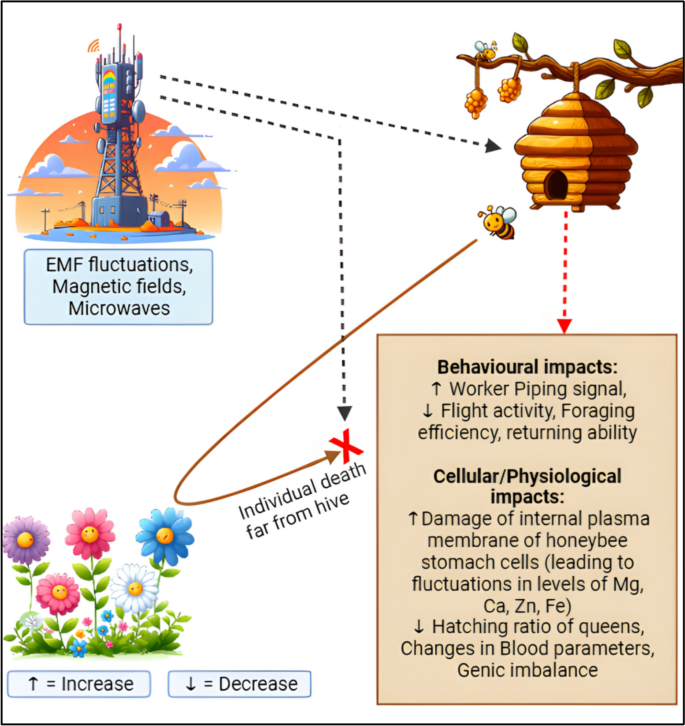
figure 3

Fig. 3  Effects of electromagnetic fields on Honeybee health: EMF exposure is proposed to induce both behavioural changes (reduced foraging, increased distress signals, and impaired navigation) and cellular/physiological effects (membrane damage, mineral imbalances, reproductive impairment, stress markers, and genic imbalances). These changes can lead to individual bee death and potentially disrupt colony dynamics and survival, which can ultimately boost the process of colony collapse disorder​ Full size image

Singh G, Rana A. Honeybees and colony collapse disorder: understanding key drivers and economic implications. Proc. Indian Natl. Sci. Acad. (2025). https://doi.org/10.1007/s43538-025-00399-x

​Abstract

Biodiversity, including the diversity of pollinators such as honeybees, is crucial for ecosystem stability and sustainable development. This review highlights the complex factors contributing to Colony Collapse Disorder (CCD), focusing on inadequate bee management practices, pesticide exposure, biotic stressors, nutritional deficiencies, electromagnetic fields, and climate change. These stressors are shown to interact in ways that impair honeybee health and behavior, leading to colony declines. The paper details the biological consequences of CCD, including the absence of adult worker bees, the persistence of the queen, and the lack of dead bees within the hive. The economic impact of declining honeybee populations is significant, with losses affecting crop yields, food prices, and global trade. This decline threatens agriculture, particularly in regions dependent on pollination services. The review emphasizes the interconnectedness of honeybee health with broader ecological and economic systems, calling for urgent conservation measures, improved management practices, and sustainable agricultural strategies to mitigate the negative effects of CCD. Key recommendations for future research focus on the need for regional studies, long-term monitoring, and public education on the importance of honeybee conservation.

Electromagnetic fields and bee disappearance

One intriguing theory posits that the proliferation of telecommunications technology and the increasing prevalence of electromagnetic fields (EMFs) may play a role in CCD (Fig. 3) (Wyszkowska et al. 2019; Sahib 2011; Hill & Bartomeus 2016). Adult honeybees possess a magnetoreception sense akin to other animals, including birds, microbes, fishes, whales, dolphins, and insects. Like other organisms such as birds, microbes, fishes, whales, dolphins, and insects, adult honeybees are equipped with an impressive magnetoreception sense. This sense aids in navigation during migrations and long-distance travel (Ferrari 2014). It is postulated that magnetic fields, electromagnetic field fluctuations, and geomagnetic disturbances disrupt bees’ navigation systems, preventing their return to their hives (Ferrari 2014). In CCD the vanished bees never recover but are believed to die individually, far from their hives (Sahib 2011). Honeybees are known to detect Earth’s magnetic field, possibly using organized magnetic nanoparticles within their bodies (Liang et al. 2016; Lambinet et al. 2017). Thielens et al. conducted a study on the effects of radio-frequency electromagnetic fields (RF-EMFs) on Western honeybees (Thielens et al. 2020). Their study suggested that a modest transition in environmental incident power density, moving from frequencies below 3 GHz to higher frequencies, resulted in a notable rise in absorbed power. Active mobile phone handsets were found to have a profound impact on bee behaviour, inducing worker piping signals. Subsequent experiments confirmed these initial observations with controlled RF-EMF signal enhancements (Favre 2017). Mall and Kumar (2014) reported that radiofrequency and electromagnetic radiations can negatively impact biomolecular cells, ultimately impairing the biological structure and functions of organisms. Honeybees possess magnetic crystals in their fat bodies, and the effect of cell phone tower electromagnetic radiation on the foraging behaviour of Asiatic honeybees was observed (Taye et al. 2017). Observations included changes in returning ability, flight activity, and pollen foraging efficiency. Results revealed that colonies close to mobile phone towers were most affected, with flight activity and returning ability decreasing as proximity to the towers increased. RF-EMF from wireless devices and cell towers can cause changes in neurotransmitter functions, blood–brain barrier, morphology, calcium efflux, electrophysiology, cellular metabolism, and gene and protein expression in certain types of cells, even at low intensities (Sivani & Sudarsanam 2012). Exposure to mobile phone radiation has been shown to cause decay and damage to the internal plasma membranes of honeybee stomach cells, which in turn affect the levels of Mg, Ca, Zn, and Fe elements in the cells (Mahmoud & Gabarty 2021). Mobile phone radiation has been found to significantly reduce the hatching ratio of honeybee queens, but it did not adversely affect mating success. However, surviving queens were not negatively impacted after the exposure (Odemer & Odemer 2019).

Microwave radiation from mobile phones has been shown to cause adverse effects on different cell functions, including histological alterations in various visceral organs and changes in blood parameters in mice models (Yousif Al-Fatlawi 2022). Although Pollen foraging behavior did not show any significant difference, these findings underscore the potential harm of cell phone radiation on honeybee populations, which could have far-reaching consequences for ecosystems.

https://link.springer.com/article/10.1007/s43538-025-00399-x#Sec5

pdf: https://link.springer.com/content/pdf/10.1007/s43538-025-00399-x.pdf

--

Electromagnetic radiation as an emerging driver factor for the decline of insects

Alfonso Balmori. Electromagnetic radiation as an emerging driver factor for the decline of insects. Sci Total Environ. 767:144913. 
https://doi.org/10.1016/j.scitotenv.2020.144913.

Highlights

• Biodiversity of insects is threatened worldwide
• This reductions is mainly attributed to agricultural practice and pesticide use
• There is sufficient evidence on the damage caused by electromagnetic radiation
• Electromagnetic radiation may be a complementary driver in this decline
• The precautionary principle should be applied before any new deployment (e.g. 5G)

Abstract

The biodiversity of insects is threatened worldwide. Numerous studies have reported the serious decline in insects that has occurred in recent decades. The same is happening with the important group of pollinators, with an essential utility for pollination of crops. Loss of insect diversity and abundance is expected to provoke cascading effects on food webs and ecosystem services. Many authors point out that reductions in insect abundance must be attributed mainly to agricultural practices and pesticide use. On the other hand, evidence for the effects of non-thermal microwave radiation on insects has been known for at least 50 years. The review carried out in this study shows that electromagnetic radiation should be considered seriously as a complementary driver for the dramatic decline in insects, acting in synergy with agricultural intensification, pesticides, invasive species and climate change. The extent that anthropogenic electromagnetic radiation represents a significant threat to insect pollinators is unresolved and plausible. For these reasons, and taking into account the benefits they provide to nature and humankind, the precautionary principle should be applied before any new deployment (such 5G) is considered.

Excerpt

The precautionary principle and the importance of seriously considering EMR as a factor of insect decline

Despite the strong scientific evidence of the negative impacts of electromagnetic radiation on insects, a recent study funded by the European Union's Horizon 2020 Research and Innovation Programme (EKLIPSE) stated that our current knowledge concerning the impact of anthropogenic RF-EMR on pollinators (and other invertebrates) is inconclusive (Vanbergen et al., 2019). Thus, the extent to which anthropogenic EMR  represents a significant threat to insect pollinators is unresolved. For these reasons, and taking into account the benefits they provide to nature and humankind, the precautionary principle of the European Union (Communication from the Commission on the Precautionary Principle, 2000) should be applied.

The potential effects of RF-EMFs on most taxonomic groups, including migratory birds, bats and insects, are largely unknown, and the potential effects on wildlife could become more relevant with the expected adoption of new mobile network technology (5G), raising the possibility of unintended biological consequences (Sutherland et al., 2018). Thus, before any new deployment (such 5G) is considered, its effects should be clearly assessed, at least while conclusions are drawn and these existing uncertainties are overcome, according to the official document ‘Late Lessons of EarlyWarnings’ (European Environment Agency, 2013).

A letter by the United States Department of the Interior sent to the National Telecommunications and Information Administration in the Department of Commerce warns about the scarcity of studies carried out on the impacts from non-ionising EMR emitted by communication towers (United States Department of the Interior, 2014). The precise potential effects of increases in EMR on wildlife, which are not yet well recognised by the global conservation community, have been identified as an important emerging issue for global conservation and biological diversity (Sutherland et al., 2018). Thus, aswe have explained in this review, EMR should be seriously considered as a complementary driver for the dramatic decline in insects in recent studies, acting in synergy with agricultural intensification, pesticides, invasive species and climate change.


--

Review. The influence of bioactive mobile telephony radiation at the level of a plant community – Possible mechanisms and indicators of the effects

CzerwiÅ„ski M, Januszkiewicz L, Vian A, Lázaro A. Review. The influence of bioactive mobile telephony radiation at the level of a plant community – Possible mechanisms and indicators of the effects. Ecological Indicators. 108, January 2020, 105683. https://doi.org/10.1016/j.ecolind.2019.105683.

Highlights

• There are various indicators of microwave radiation impact on herbaceous vegetation.
• The best indicators are some parameters of vegetation canopy or individual  plants.
• Specific plant functional groups may be indicators of long-term community processes.
• Other organisms interacting with plants, e.g. pollinators, should also be cons idered.
• The selection of indicators depends on the propagation of radiation in the canopy.

Abstract

Environmental exposure to radiofrequency electromagnetic fields (RF-EMFs) from mobile telephony has rapidly increased in the last two decades and this trend is expected to continue. The effects of this exposure at plant community level are unknown and difficult to assess in a scientifically appropriate manner. Such an assessment can be scientifically adequate if a studied plant community is completely new and control-impact radiation treatment is used.

In this review we aimed to predict ecological effects and identify indicators of the impact of bioactive RF-EMFs at the mobile telephony frequency range on plant communities. We considered the scenario where a plant community was exposed to radiation generated by a base transmitting station antenna mounted on a nearby mast. This plant community can be represented by mesic meadow, ruderal or arable weed community, or other herbaceous, moderately productive vegetation type. We concentrated primarily on radiation effects that can be recorded for a year since the exposure started. To predict them we used physical theories of radiowave propagation in vegetation and the knowledge on plants physiological responses to RF-EMF. Our indicators can be used for the detection of the impact of RF-EMFs on vegetation in a control-impact experiment.

The identified indicators can be classified into the following groups: (1) canopy parameters; (2) plant characteristics to be measured in the field or laboratory in a number of individuals that represent the populations of selected species; (3) community weighted means/medians (CWMs) of plant traits and strategies; (4) the abundance of other organisms that interact with plants and can influence their fitness or population size. The group of canopy parameters includes mean height, vertical vegetation structure and dry weight of above-ground standing phytomass. Plant characteristics requiring biometric sampling in the field are plant height, the number of fruits and seeds, as well as seed viability. The group of plant traits that are calculated as CWMs covers seed releasing height, seed dispersal mode, SLA, leaf orientation, month of germination and flowering, Ellenberg’s light indicator value, and the proportion of individuals in the classes of competitors and stress tolerators according to Grime's CSR strategy scheme. The group of “non-plant” indicators includes primarily the frequency of flower visits by beetles, wasps, hoverflies, and bees that have their nests over ground. To detect ecological responses that occur for the first year since a herbaceous community has been exposed to potentially bioactive RF-EMF, the first two indicators groups should be used.


Aug 1, 2019 (Updated Nov 1, 2019)

Selected Studies that Reported Adverse Effects of Electromagnetic Field (EMF) Exposure 
on Plants, Animals and Insects

written by the Advisors to the International EMF Scientist Appeal, June 25, 2019


EMF exposure studies have found ...

in plants reduced growth, increased infection and physiological and morphological changes (Balodis et al. 1996, Haggerty 2010, Waldmann-Selsam et al. 2016, Havas and Symington 2016, Vian et al. 2016, Halgamuge 2017);

in birds, aggressive behavior, impaired reproduction and interference with migration (Southern 1975, Larkin and Sutherland 1977, Balmori 2004, Balmori and Hallberg 2007, Everaert and Bauwens 2007, Fernie et al. 2010, Engels et al. 2015, Wiltschko et al. 2015);

in livestock, especially dairy cows, reduced productivity, impaired reproduction, and sudden death (Burchard et al. 1996, Loscher and Kas 1998, Hillman et al. 2013, Stetzer et al. 2016);

in rodents, increased cancer risk in three long-term studies (Chou et al 1992, NTP 2018, Falcioni et al. 2019); 

in amphibians (Balmori 2006, Balmori 2010) and insects (Cucurachi et al. 2013), deformities and population decline; and

in honey bees, aggressive behavior, reduced learning, reduced productivity, swarming and abandoning hives (Harst et al. 2006, Pattezhy 2009, Warnke 2009, Favre 2011, Kumar et al. 2011, Sahib 2011, Shepherd et al. 2019). 

References

Balmori A. 2004. Effects of electromagnetic fields of phone masts on a population of white storks (Ciconia ciconia). Electromagnetic Biology and Medicine 24: 109–119.

Balmori A. 2006. The incidence of electromagnetic pollution on the amphibian decline: Is this an important piece of the puzzle? Toxicological & Environmental Chemistry 88 (2): 287–299.

Balmori A. 2010. Mobile phone mast effects on common frog (Rana temporaria) tadpoles: the city turned into a laboratory. Electromagn Biol Med. 29 (1–2):31–35.

Balmori A and O Hallberg. 2007. The urban decline of the house sparrow (Passer domesticus): A possible link with electromagnetic radiation. Electromagnetic Biology and Medicine 26 (2): 141–151.

Balodis V, G Briimelis, K Kalviskis, et al. 1996. Does the Skrunda Radio Location Station diminish the radial growth of pine trees? The Science of the Total Environment 180: 57-64.

Burchard JF, DH Nguyen DH, and M Rodriguez. 2006. Plasma concentrations of thyroxine in dairy cows exposed to 60 Hz electric and magnetic fields. Bioelectromagnetics 27 (7): 553–559.

Chou C-K, A Guy, LL Kunz, RB Johnson, JJ Crowley and J. H. Krupp. 1992. Long-term, low-level microwave irradiation of rats. Bioelectromagnetics 13:469–496. See NTP: Not the First Govt. Study to Find Wireless Radiation Can Cause Cancer in Lab Rats

Cucurachi S, WLM Tamis et al. 2013. A review of the ecological effects of radiofrequency electromagnetic fields (RF-EMF), Environment International 51:116–140.

Engels S, N-L Schneider, N Lefeldt, et al. 2015. Anthropogenic electromagnetic noise disrupts magnetic compass orientation in a migratory bird. Nature 509: 353.

Everaert J and D Bauwens. 2007. A possible effect of electromagnetic radiation from mobile phone base stations on the number of breeding house sparrows (Passer domesticus) Electromagn Biol Med. 26 (1): 63–72.

Falcioni L, L Bua, E Tibaldi, et al. 2019. Report of final results regarding brain and heart tumors in Sprague-Dawley rats exposed from prenatal life until natural death to mobile phone radiofrequency field representative of a 1.8 GHz GSM base station environmental emission. Environmental Research 165:496–503. See Ramazzini Institute Cell Phone Radiation Study Replicates NTP Study

Favre D. 2011. Mobile phone-induced honeybee worker piping. Apidologie 42 (3): 270– 279.

Ferni KJ, NJ Leonard and DM Bird. 2010. Behavior of free-ranging and captive American kestrels under electromagnetic fields. J. Tox. and Environ. Health Part A Vol 59 (8).

Haggerty K. 2010. Adverse influence of radio frequency background on Trembling Aspen seedlings: Preliminary observations. International Journal of Forestry Research 2010, 7 pages.

Halgamuge MN. 2016. Review: Weak radiofrequency radiation exposure from mobile phone radiation on plants. Electromagn Biol Med. 2017;36(2):213-235.

Harst W, J Kuhn, and H Stever. 2006. Can electromagnetic exposure cause a change in behaviour? Studying possible non-thermal influences on honey bees–An approach within the framework of Educational Informatics. Acta Systematica – IIAS Intern. J. 6: 1–6.

Havas M and MS Symington. 2016. Effects of Wi-Fi radiation on germination and growth of garden cress (Lepidium sativum), broccoli (Brassica oleracea), red clover (Trifolium pratense) and pea (Pisum sativum) seedlings: A partial replication study. Current Chemical Biology 10 (1): 65–73.

Hillman D, D Stetzer, M Graham, CL Goeke, et al. 2013. Relationship of electric power quality to milk production of dairy herds – Field study with literature review. Science of the Total Environment 447: 500–514.

Kumar NR, S Sangwan and P Badotra. 2011. Exposure to cell phone radiations produces biochemical changes in worker honey bees. Toxicol Int. 18 (1): 70–72.

Larkin RP and PJ Sutherland. 1977. Migrating birds respond to Project Seafarer's electromagnetic field. Science. 195 (4280): 777–9.

Löscher W, and G Käs. 1998. Extraordinary behavior disorders in cows in proximity to transmission stations. Translated from German language. Der Praktische Tierarz 79 (5): 4377 444.

NTP 2018. NTP Technical Report on the Toxicology and Carcinogenesis Studies in Hsd:Sprague Dawley SD Rats exposed to Whole-body Radio Frequency Radiation at a Frequency (900 MHz) and Modulations (GSM and CDMA) used by Cell Phones. National Toxicology Program, National Institutes of Health, Public Health Service, U.S. Department of Health and Human Services. 384 pp. See NTP Cell Phone Radiation Study: Final Reports

Pattazhy S. 2009. Mobile phone towers a threat to honey bees: Study. The Times of India, August 2009. http://timesofindia.indiatimes.com/NEWS/Science/Mobile-phonetowers-a-threatto-honeybees-Study/articleshow/4955867.cms.

Shepherd S, Hollands G, Godley VC, Sharkh SM, Jackson CW, Newland PL. Increased aggression and reduced aversive learning in honey bees exposed to extremely low frequency electromagnetic fields. PLoS One. 2019 Oct 10;14(10):e0223614. doi: 10.1371/journal.pone.0223614.

Southern WE. 1975. Orientation of gull chicks exposed to project Sanguine's electromagnetic field. Science. 189 (4197): 143–145.

Stetzer D, AM Leavitt, CL Goeke, and M Havas. 2016. Monitoring and remediation of on-farm and off-farm ground current measured as step potential on a Wisconsin dairy farm: A case study. Electromagnetic Biology and Medicine 35 (4): 321–336.

Vian, A, E Davies, M Gendraud and P Bonnet. 2016. Plant responses to high frequency electromagnetic fields, BioMed research International Vol. 2015 Article ID 1830262, 13 pp.

Waldmann-Selsam, A Balmori-de la Puente, H Breunig and A Balmori. 2016. Radiofrequency radiation injures trees around mobile phone base stations. Science of the Total Environment 572: 13 554–569.

Warnke U. 2009. Bees, birds and mankind. Destroying nature by ‘electrosmog’ effects of wireless communication technologies, A brochure series by the Competence Initiative for the Protection of Humanity, Environment and Democracy, 47 pp.

Wiltschko R, P Thalau, D Gehring, C Niessner, T Ritz and W. Wiltschko. 2015. Magnetoreception in birds: the effect of radio-frequency fields. J R Soc Interface 12(103).

--

Increased aggression and reduced aversive learning in honey bees exposed to extremely low frequency electromagnetic fields

Shepherd S, Hollands G, Godley VC, Sharkh SM, Jackson CW, Newland PL. Increased aggression and reduced aversive learning in honey bees exposed to extremely low frequency electromagnetic fields. PLoS One. 2019 Oct 10;14(10):e0223614. doi: 10.1371/journal.pone.0223614. 


Abstract

Honey bees, Apis mellifera, are a globally significant pollinator species and are currently in decline, with losses attributed to an array of interacting environmental stressors. Extremely low frequency electromagnetic fields (ELF EMFs) are a lesser-known abiotic environmental factor that are emitted from a variety of anthropogenic sources, including power lines, and have recently been shown to have a significant impact on the cognitive abilities and behaviour of honey bees. Here we have investigated the effects of field-realistic levels of ELF EMFs on aversive learning and aggression levels, which are critical factors for bees to maintain colony strength. Bees were exposed for 17 h to 100 μT or 1000 μT ELF EMFs, or a sham control. A sting extension response (SER) assay was conducted to determine the effects of ELF EMFs on aversive learning, while an intruder assay was conducted to determine the effects of ELF EMFs on aggression levels. Exposure to both 100 μT and 1000 μT ELF EMF reduced aversive learning performance by over 20%. Exposure to 100 μT ELF EMFs also increased aggression scores by 60%, in response to intruder bees from foreign hives. These results indicate that short-term exposure to ELF EMFs, at levels that could be encountered in bee hives placed under power lines, reduced aversive learning and increased aggression levels. These behavioural changes could have wider ecological implications in terms of the ability of bees to interact with, and respond appropriately to, threats and negative environmental stimuli.


Open access paper: https://journals.plos.org/plosone/article?id=10.1371/journal.pone.0223614

--

April 17, 2019

Letter to the National Park Service from the Environmental Health Trust

This thirteen page letter to the National Park Service from the Environmental Health Trust, dated April 10, 2019, summarizes the scientific basis for major health and environmental concerns about a proposal to install wireless telecom facilities in Grand Teton National Park.

The letter summarizes research on harm to the environment and wildlife from wireless radiation exposure. Furthermore, it addresses the following topics: (1) research on harm to humans; (2) rapid increase in wireless radiation exposure; (3) inadequacy of the Federal Communications Commission's exposure limits to protect humans; (4) greater susceptibility of children; (5) recent appeals from hundreds of experts to reduce exposure limits; and (6) other cell tower safety hazards. 

This well-documented letter (81 references) can be downloaded from the following link:


--

July 18, 2016

A Briefing Memo by Dr. Albert Manville

Albert M. Manville, II, Ph.D. A Briefing Memorandum: What We Know, Can Infer, and Don’t Yet Know about Impacts from Thermal and Non-thermal Non-ionizing Radiation to Birds and Other Wildlife — for Public Release. July 14, 2016.


In this memo, Dr. Manville reviews the scientific literature that examines the impacts on wildlife from exposure to radio frequency radiation. 

He observes that although the FCC has standards to protect humans from the heating  (i.e., thermal) effects of wireless radiation exposure from cellular and broadcast towers, no standards exist to protect wildlife from thermal or non-thermal effects:

“The radiation effects on wildlife need to be addressed by the Federal Communications Commission (FCC), the Environmental Protection Agency (EPA), the Department of Commerce, the U.S. Fish and Wildlife Service (FWS) and other governmental entities.”

Dr. Manville concludes with the following statement:

“In summary, we need to better understand … how to address these growing and poorly understood radiation impacts to migratory birds, bees, bats, and myriad other wildlife. At present, given industry and agency intransigence … massive amounts of money being spent to prevent addressing impacts from non-thermal radiation — not unlike the battles over tobacco and smoking — and a lack of significant, dedicated and reliable funding to advance independent field studies, … we are left with few options. Currently, other than to proceed using the precautionary approach and keep emissions as low as reasonably achievable, we are at loggerheads in advancing meaningful guidelines, policies and regulations that address non-thermal effects....”

Dr. Manville recommends that the U.S. adopt the following recommendations because federally-protected wildlife species are currently in danger from RFR exposure:

“We desperately need to conduct field research on thermal and non-thermal radiation impacts to wild migratory birds and other wildlife here in North America, similar to studies conducted in Europe….”

“Studies need to be designed to better tease out and understand causality of thermal and non-thermal impacts from radiation on migratory birds…. efforts need to be made to begin developing exposure guidelines for migratory birds and other wildlife …”

“To minimize deleterious radiation exposures, these guidelines should include use of avoidance measures such as those developed by the electric utility industry for bird collision and electrocution avoidance …”

“Studies need to be conducted on the use of “faux” branches (i.e., metal arms that mimic pine or fir branches) on cell and/or FM towers intended to disguise the towers as trees, but provide nesting and roosting opportunities for migratory birds including Bald Eagles, which will almost certainly be impacted both by thermal and non-thermal radiation effects.”

“Agencies tasked with the protection, management, and research on migratory birds and other wildlife … need to develop radiation policies that avoid or minimize impacts to migratory birds and other trust wildlife species.”

“As Levitt and Lai (2010) concluded, we do not actually need to know whether RFR effects are thermal or non-thermal to set exposure guidelines. Most scientists consider non-thermal effects as well established, even though the implications are not fully understood.”

“Given the rapidly growing database of peer-reviewed, published scientific studies (e.g., http://www.saferemr.com, School of Public Health, University of California, Berkeley), it is time that FCC considers thermal and non-thermal effects from EMR in their tower permitting, and incorporates changes into their rulemaking regarding ‘effects of communication towers on migratory birds.’”


Dr. Albert Manville II is an adjunct faculty member at Johns Hopkins University. He served as a senior wildlife biologist with the U.S. Fish and Wildlife Service from 1997 to 2014.  He chaired the Communication Tower Working Group, partnering with the communications industry, federal and state agencies, researchers, and non-profit organizations. He testified more than 40 times before Congress and other governmental bodies and published more 170 papers. For more information, see http://advanced.jhu.edu/about-us/faculty/albert-manville/.

Dr. Manville’s memo is available at http://bit.ly/Manvillewildlife.