What are the SAR values for iPhone’s new smart phones?
How should consumers use this information?
How should consumers use this information?
about cell phone use.
Also see: "Do iPhones emit more radiation than
Samsung Galaxy phones?"
Also see: "Do iPhones emit more radiation than
Samsung Galaxy phones?"
To reduce your exposure to microwave radiation:
- When communication is unnecessary, use Airplane mode.
- When using cellular, turn off Wi-Fi and Bluetooth.
- When using Wi-Fi, turn off cellular and Bluetooth.
- When phone is powered on, never keep phone next to your body, especially during a phone call.
- When communicating, use phone in speaker mode or a wired earpiece.
For information about wireless head sets, see my AirPods post.
Sep 13, 2018 (Updated Oct 25, 2018)
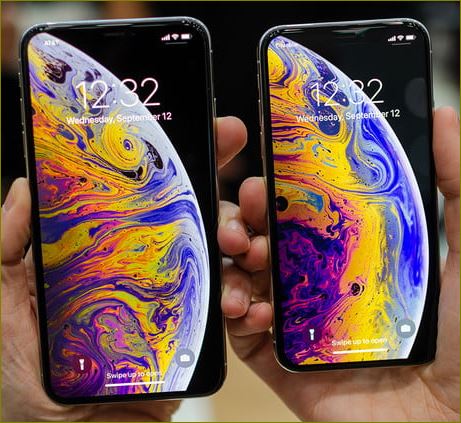
According to test reports filed with the Federal Communications Commission (FCC), the Specific Absorption Rate (SAR) for the iPhone XS Models A1920, A2099 and A2100 (FCC #BCG-E3218A) for cellular transmission is 0.90 watts per kilogram (w/kg) at the head, and 0.99 w/kg when worn on the body. The hotspot/Airplay SAR is 0.99 w/kg. The SAR for simultaneous transmission (cellular plus Wi-Fi) is 1.35 w/kg at the head, 1.53 w/kg when worn on the body, and 1.53 w/kg when used as a hotspot. (1a)
The SAR for the iPhone XS Max Models A1921, A2103 and A2104 (BCG-E3219A) for cellular transmission is 1.00 watts per kilogram (w/kg) at the head, and 1.00 w/kg when worn on the body. The hotspot/Airplay SAR is 1.00 w/kg. The SAR for simultaneous transmission (cellular plus Wi-Fi) is 1.39 w/kg at the head, 1.52 w/kg when worn on the body, and 1.52 w/kg when used as a hotspot. (1b)
According to test reports filed with the Federal Communications Commission (FCC), the Specific Absorption Rate (SAR) for the iPhone XS Models A1920, A2099 and A2100 (FCC #BCG-E3218A) for cellular transmission is 0.90 watts per kilogram (w/kg) at the head, and 0.99 w/kg when worn on the body. The hotspot/Airplay SAR is 0.99 w/kg. The SAR for simultaneous transmission (cellular plus Wi-Fi) is 1.35 w/kg at the head, 1.53 w/kg when worn on the body, and 1.53 w/kg when used as a hotspot. (1a)
The SAR for the iPhone XS Max Models A1921, A2103 and A2104 (BCG-E3219A) for cellular transmission is 1.00 watts per kilogram (w/kg) at the head, and 1.00 w/kg when worn on the body. The hotspot/Airplay SAR is 1.00 w/kg. The SAR for simultaneous transmission (cellular plus Wi-Fi) is 1.39 w/kg at the head, 1.52 w/kg when worn on the body, and 1.52 w/kg when used as a hotspot. (1b)
The SAR for the iPhone XR Models A1984, A2107 and A2108 (BCG-E3220A) for cellular transmission is 0.90 watts per kilogram (w/kg) at the head, and 1.10 w/kg when worn on the body. The hotspot/Airplay SAR is 1.10 w/kg. The SAR for simultaneous transmission (cellular plus Wi-Fi) is 1.41 w/kg at the head, 1.59 w/kg when worn on the body, and 1.59 w/kg when used as a hotspot. (2)
All SARs reported above are averaged over one gram of body tissue corresponding to the US guidelines. The SAR values may vary by cell phone carrier.
The SAR values listed above are for conventional cell phone communications using spectrum licensed to cell phone carriers (i.e., PCE). Apple has not yet posted the SAR values for these phones on its website. Apple will likely list slightly higher values for the head and body which represent cell phone communications using unlicensed spectrum (i.e., NII). Note that Apple does not report on its website the SARs in hotspot mode or for simultaneous transmission of cellular and Wi-Fi.
The minimum separation distance for body-worn testing was 5 mm (about two-tenths of an inch).
Outside of the United States, Apple markets other versions of these iPhone models that use different carrier frequencies. The names for these models are A2097, A2098, A2101, and A2102. The corresponding FCC IDs for these models are BCG-3232A, BCG-3233A, BCG-3234A, BCG-3235A, respectively. The SARs (averaged over 1 gram) are similar to those reported above. Note that some countries require the SARs to be averaged over 10 grams which is a more permissive test of RF exposure than averaging over 1 gram.
The SAR values for the Samsung Galaxy S8, 8 Plus, and Note smart phones were obtained at a separation distance of 15 mm (about six-tenths of an inch) from the torso so the body-worn SAR values are not comparable to those reported for the Apple iPhones. For more information see my article about Samsung smart phones.
What do SAR values mean to the consumer?
The legal limit for the SAR in the U.S. is 1.60 w/kg (averaged over one gram). In many countries the legal limit for the SAR is 2.00 w/kg (averaged over ten grams) which enables the body to absorb 2-3 times the radiation than the U.S. guideline permits.
The FCC requires that all cell phone models be tested for their Specific Absorption Rate or SAR prior to marketing. The SAR is a measure of the maximum amount of microwave radiation absorbed by the head or the body. It is measured in a laboratory using an artificial model of a large adult male with different fluids to simulate human tissue. The SAR, which is measured in watts per kilogram, represents the maximum amount of energy absorbed in any one gram of tissue in the test model. Phones sold in the U.S. typically range in SAR values from about 0.20 w/kg up to the 1.60 legal limit. (3, 4)
The SAR test, adopted in 1996 by the FCC, was criticized by the U.S. Government Accountability Office in 2012. (5) The test does not reflect those who currently use cell phones, nor does it correspond to the way people use them. Today many children are cell phone users--the child’s brain absorbs twice the radiation as the adult’s brain. Moreover, the artificial head does not contain any metal (e.g., dental fillings, earrings, or eyeglass frames) which could increase the radiation absorption beyond the measured SAR in the laboratory. (5)
The FCC assumes that consumers will carry their cell phones in a manufacturer-approved holder that keeps the phone a minimum distance away from the body. However, most people do not keep their phone in a cell phone holder. For the body-worn SAR test, the FCC allows the manufacturer to choose the separation distance between the cell phone and the test model as long as consumers are informed about the minimum distance tested. However, few consumers are aware of the manufacturer’s recommended minimum body separation distance from their cell phone because this information is often difficult to find. Thus, most consumers are in the dark about precautions they can take to keep their exposure to microwave radiation below the legal limit. This prompted the city of Berkeley, California to adopt landmark legislation that requires cellphone retailers to inform their customers about the manufacturer’s safety information.
To ensure that the cell phone does not exceed the legal limit, consumers should never keep their cell phone in their pockets or next to their skin. The cell phone is not tested directly against the body because almost all cell phones would fail the SAR test as the radiation absorption increases dramatically when the cell phone is close to the body.
Is the legal limit sufficient to protect the cell phone user’s health?
Federal policies in the U.S. could lead the public to believe that all legally-marketed cell phones are safe, and that a cell phone's SAR doesn't matter as long as it meets the legal limit of 1.6 watts per kilogram. (3, 4)
However, the Environmental Working Group and experts point out that the SAR only measures the maximum microwave absorption from cell phone use that perfectly matches laboratory conditions. The SAR is not a good indicator of one’s cumulative microwave dose under naturalistic conditions. The research evidence suggests that how one uses the phone (e.g., hands-free) and one’s cell phone carrier actually matters more than the phone’s SAR level. (4, 6, 7)
The SAR standard was developed to protect users only from the acute effects of the heat generated by microwave radiation (i.e., the thermal effect). (5) The SAR limit does not protect users from the non-thermal effects caused by the cumulative exposure over time to cell phone radiation.
Yet, thousands of laboratory studies with animals and cell samples have found deleterious biologic effects from short-term exposure to low intensity cell phone radiation, including development of stress proteins, micronuclei, free radicals, DNA breakage, and sperm damage. (8) Human studies have also found that brief exposure to cell phone radiation alters brain activity and can open the blood-brain barrier which could enable chemical toxins in the circulatory system to penetrate the brain. (9)
Major studies with humans have found increased cancer risk, including a three-fold increase in brain cancer among those who used wireless phones (cell phones and cordless phones) for 25 or more years. (10) Based upon this research, the World Health Organization in 2011 declared radiofrequency radiation "possibly carcinogenic" in humans (Group 2B). (11)
Other risks from cell phone use include reproductive harm and male infertility, and neurological disorders (e.g., impaired cognitive functioning, headaches and migraines, and ADHD [attention deficit/ hyperactivity disorder]) in children. (12, 13)
Based upon the weight of the evidence from several decades of research including thousands of peer-reviewed published studies, many experts worldwide have signed declarations calling upon government to adopt stronger radiation standards to protect consumers from low intensity, non-thermal exposures from radiation associated with wireless communications, and to alert consumers about how to reduce their risk of harm. (14 -16)
Recent evidence suggests that brain tumor incidence is increasing in the U.S. and other countries and exposure to cell phone radiation may be contributing to this increase. (17) More than 240 scientists who have published peer-reviewed research on electromagnetic fields and biology or health have signed a petition, the International EMF Scientist Appeal, calling for stronger regulation of wireless radiation.
For tips on how to reduce exposure to wireless radiation, see "Some Tips to Reduce Your Exposure to Wireless Radiation". (18) In short, limit your use of the phone, keep the phone away from your body whenever it is powered on, use the phone hands-free, and turn off transmitters not in use (e.g., shut off Wi-Fi or use airplane mode).
For tips on how to reduce exposure to wireless radiation, see "Some Tips to Reduce Your Exposure to Wireless Radiation". (18) In short, limit your use of the phone, keep the phone away from your body whenever it is powered on, use the phone hands-free, and turn off transmitters not in use (e.g., shut off Wi-Fi or use airplane mode).
References
(1a) UL Verification Services, Inc. SAR Evaluation Report for Smartphone. FCC ID: BCG-E3218A. Model Name: A1920, A2099, A2100. Prepared for Apple, Inc. Report Number: 12124121-S1V2. Issue Date: 8/30/2018. Fremont, CA. https://fccid.io/BCG-E3218A/RF-Exposure-Info/SAR-Test-Report-1-of-11-3986211
(3) FCC. Specific Absorption Rate (SAR) for Cellular Telephones. Undated. http://www.fcc.gov/encyclopedia/specific-absorption-rate-sar-cellular-telephones
(1a) UL Verification Services, Inc. SAR Evaluation Report for Smartphone. FCC ID: BCG-E3218A. Model Name: A1920, A2099, A2100. Prepared for Apple, Inc. Report Number: 12124121-S1V2. Issue Date: 8/30/2018. Fremont, CA. https://fccid.io/BCG-E3218A/RF-Exposure-Info/SAR-Test-Report-1-of-11-3986211
(1b) UL Verification Services, Inc. SAR Evaluation Report for Smartphone. FCC ID: BCG-E3219A. Model Name: A1921, A2103, A2104. Prepared for Apple, Inc. Report Number: 12124122-S1V1. Issue Date: 8/30/2018. Fremont, CA. https://fccid.io/BCG-E3219A/RF-Exposure-Info/SAR-Test-Report-1-of-10-3986223
(2) UL Verification Services, Inc. SAR Evaluation Report for Smartphone. FCC ID: BCG-E3220A. Model Name: A1984, 2108, 2107. Prepared for Apple, Inc. Report Number: 12162294-S1V1. Issue Date: 8/30/2018. Fremont, CA. https://fccid.io/BCG-E3220A/RF-Exposure-Info/SAR-test-report-1-of-10-3989380
(3) FCC. Specific Absorption Rate (SAR) for Cellular Telephones. Undated. http://www.fcc.gov/encyclopedia/specific-absorption-rate-sar-cellular-telephones
(4) FCC. “Specific Absorption Rate (SAR) For Cell Phones: What It Means For You.” Undated. http://www.fcc.gov/guides/specific-absorption-rate-sar-cell-phones-what-it-means-you
(5) Joel Moskowitz. “"Comments on the 2012 GAO Report: 'Exposure and Testing Requirements for Mobile Phones Should Be Reassessed'.:” http://www.saferemr.com/2013/01/commentary-gao-2012-report-on-mobile.html
(6) Wolchover N. Radiation Risk: Are Some Cellphones More Dangerous Than Others? Life's Little Mysteries. June 23, 2011. http://www.lifeslittlemysteries.com/1550-radiation-risk-some-cell-phones-more-dangerous-than-others.html
(7) Environmental Working Group. EWG’s Guide to Safer Cell Phone Use: Where is EWG's cell phone database? August 27 2013.
(7) Environmental Working Group. EWG’s Guide to Safer Cell Phone Use: Where is EWG's cell phone database? August 27 2013.
(8) Giuliani L. Soffritti M. Non-thermal effects and mechanisms of interaction between electromagnetic fields and living matter. ICEMS Monograph. Bologna, Italy: National Institute for the Study and Control of Cancer. 2010. http://www.icems.eu/papers.htm
(9) Joel Moskowitz. “LTE Cell Phone Radiation Affects Brain Activity in Cell Phone Users.” Sep 20, 2013. http://www.prlog.org/12215083
(10) Joel Moskowitz. “Brain Cancer Risk Increases with the Amount of Wireless Phone Use: Study. http://www.prlog.org/12216483
(11) Joel Moskowitz. “Most Significant Government Health Report on Mobile Phone Radiation Ever Published.” http://www.prlog.org/12125230
(12) Joel Moskowitz. “Cell Phone Radiation, Pregnancy, and Sperm.” Nov 19, 2012. http://www.prlog.org/12026867
(13) Joel Moskowitz. “Cell Phone Use and Prenatal Exposure to Cell Phone Radiation May Cause Headaches in Children.“ http://www.prlog.org/12269207
(14) Joel Moskowitz. “Part I: Why We Need Stronger Cell Phone Radiation Regulations--Key Testimony Submitted to the FCC.” Aug 4, 2014. http://www.saferemr.com/2014/08/why-we-need-stronger-cell-phone.html
(15) Joel Moskowitz. “Part II: Why We Need Stronger Cell Phone Radiation Regulations--Key Research Papers Submitted to the FCC.” Aug 4, 2014. http://www.saferemr.com/2014/08/why-we-need-stronger-cell-phone_43.html
(16) Joel Moskowitz. “Part III: Why We Need Stronger Cell Phone Radiation Regulations--98 Scientific Experts Who Signed Resolutions.” Aug 4, 2014. http://www.saferemr.com/2014/08/why-we-need-stronger-cell-phone_4.html
(17) Joel Moskowitz. Brain Tumor Rates are Increasing in the U.S.: The Role of Cell Phone and Cordless Phone Use. http://bit.ly/risingtumors
(17) Joel Moskowitz. Brain Tumor Rates are Increasing in the U.S.: The Role of Cell Phone and Cordless Phone Use. http://bit.ly/risingtumors
(18) Joel Moskowitz. Some Tips to Reduce Your Exposure to Wireless Radiation (one page handout). Undated. http://bit.ly/saferemrtips3


